Fascia carries your gutters; soffit closes in the overhang. Here's how they fail, who repairs them, what drives the cost, and when insurance may apply.
The Part of Your Exterior Nobody Looks At
Most homeowners can point at their siding and tell you roughly what it's made of. Ask the same person where their fascia is and there's usually a pause. Soffit and fascia are the trim that finishes your roofline, and they tend to be the first part of an exterior to fail — not because they're built worse than anything else, but because they sit exactly where water concentrates before it leaves your house.
That's the practical reason soffit and fascia work belongs on an estimate as its own line rather than folded silently into a siding number. It's a different material in a different location doing a different job, and when it goes, it usually takes something else with it.
Soffit and Fascia Do Two Different Jobs
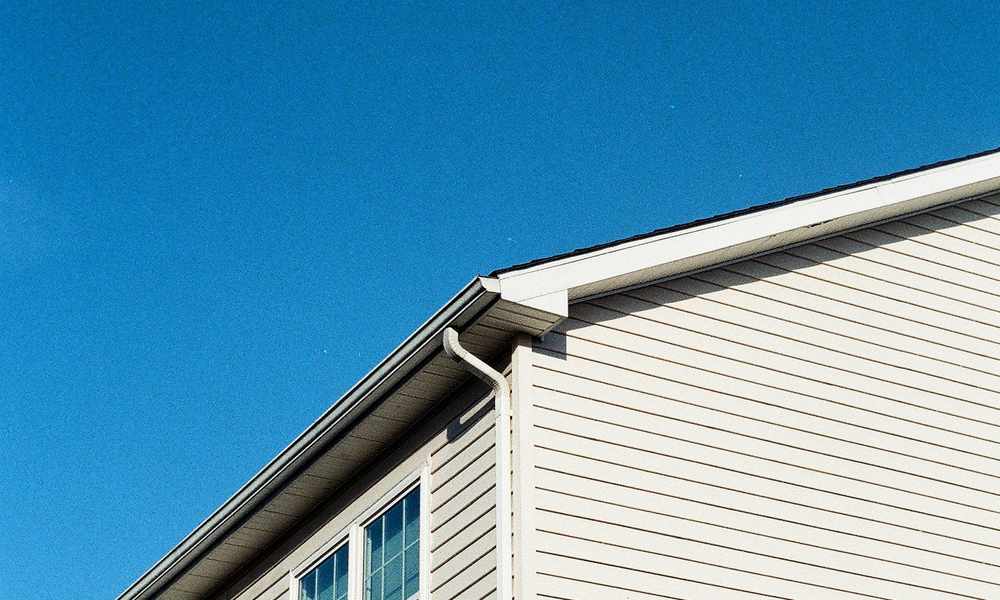
Fascia is the vertical board running horizontally along the edge of your roof, capping the ends of the rafters. It's the board your gutters are fastened to, which means it carries weight and takes the runoff of every roof slope above it. Soffit is the horizontal panel that closes in the underside of the roof overhang, bridging the gap between the top of your wall and the outer edge of the roof.
One is structural and water-facing; the other is a closure panel that often doubles as the intake point for attic airflow. They fail differently and for different reasons, which is why lumping them together as "trim" tends to hide what's actually wrong. This post is about the boards themselves deteriorating — if your question is really about airflow and a hot or musty attic, attic ventilation is the more useful place to start.
Why the Roofline Is Where Damage Usually Starts
Follow the water and the failure pattern makes sense. Rain sheets off the roof into the gutter. If that gutter is clogged, pitched wrong, or pulling loose, water backs up and spills behind it instead of through it — directly onto the fascia board it's bolted to. Fascia that stays wet after every rain eventually softens, and once the wood is soft the fasteners holding the gutter lose their grip, which makes the overflow worse. It compounds on itself.
From there it moves inward. Water that gets behind the fascia reaches the soffit panels and the exposed ends of the rafters, and in a humid climate wood that gets wet dries slowly, so each soaking starts from a wetter baseline than the last. That's the mechanism behind most of the soffit and fascia damage we're called out to look at: not one dramatic event, but a small drainage problem left running for several seasons.
What Failing Soffit and Fascia Actually Looks Like
Most of this is visible from the ground on a slow walk around the house, ideally right after a heavy rain when the evidence is freshest.
- Paint peeling or blistering in a band along the roofline, while the rest of the wall's paint looks fine
- Dark staining or streaking running down the fascia below a gutter seam or joint
- Soffit panels sagging, bowing, or separating from the wall they should sit tight against
- Wood that gives or feels spongy when pressed firmly, rather than solid
- Gutters visibly pulling away, sagging in the middle, or sitting at an uneven line
- Gaps or holes at the eave where birds, wasps, or squirrels have found a way in
- Daylight visible at the eaves from inside the attic where the soffit should close it in
Do Roofers Handle This, or a Siding Contractor?
This is one of the most common questions about this part of the house, and the honest answer is that both trades legitimately touch it, so it depends on why the work is happening. If the fascia is being replaced as part of a roof replacement, the roofer is usually already there with the roof edge open and it makes sense to handle it then. If the damage is rot from long-term water intrusion, and the surrounding trim and siding need to be matched and re-integrated, it's exterior trim work.
The awkward part is that soffit and fascia sit exactly on the boundary between the two trades, which is how they end up deferred — each side assumes the other has it. We treat it as exterior trim and handle it alongside siding repair so the roofline, the trim, and the wall below it are dealt with as one system instead of three separate callbacks.
What Actually Drives the Cost of the Repair
Anyone quoting a soffit and fascia number without looking at your roofline is guessing, because almost every real cost driver here is invisible from the street. What changes the figure is the extent of what's behind the visible damage, not the length of the run:
- How far the rot has traveled past the section that looks obviously bad — this is almost always further than it appears
- Whether the rafter tails or framing behind the fascia are affected, which turns trim work into structural repair
- Whether gutters have to come down and be re-hung, and what condition they're in once they're off
- Height, roof pitch, and access — a second-story run over a sloped yard is a different job from a single-story eave
- Matching the existing profile, material, and finish so the repair doesn't read as a patch
- Whether the soffit is vented and has to stay vented, which rules out simply closing the gap with solid panel
- How much paint and finish work the repair leaves behind
Does Homeowners Insurance Cover Soffit and Fascia Replacement?
It depends on the cause, and the distinction that matters most to a policy is sudden damage versus gradual deterioration. Damage traceable to a specific event — wind tearing soffit panels loose, a falling limb, hail — is the category homeowners policies are generally written to address. Rot that developed slowly because a gutter had been overflowing for several years is typically treated as wear and maintenance, which policies commonly exclude. Your own policy and your carrier decide the outcome, so treat this as the shape of the question rather than a prediction about your claim.
What you can control is the quality of the record. Photograph the damage before anything is repaired or cleaned up, keep the removed material rather than hauling it off immediately, and get the scope written down in detail instead of summarized as one line. If the damage came out of a storm, the same documentation habits that help with storm damage on the walls apply just as much at the roofline.
Why Patching Over Rot Doesn't Hold
The quickest-looking fix for ugly fascia is to cover it — new trim laid over the old board, or aluminum wrapped around it. On sound wood that's a legitimate, long-lasting approach. Over wood that's already wet or rotting, it's cosmetic, and it makes the problem harder to see: the decay keeps advancing underneath a surface that now looks finished, and the trapped moisture has even less opportunity to dry than it did before.
The part that determines whether this repair lasts is the same part nobody sees once it's done — removing the material that's actually gone, confirming the framing behind it is sound, and fixing the drainage that caused it so the new board isn't put straight back under the same overflow. Replacing the board without correcting why the board failed just resets the clock.
What to Expect From Us
We walk your roofline with you, press-test the fascia rather than judging it from the driveway, and look at where your gutters are actually sending water, because that's usually the cause rather than the symptom. You get a free, written, itemized estimate with the trim work on its own line — what's being replaced, what's being kept, and what's driving the number — not folded into a siding total where you can't check it. No hidden fees, and nothing quoted before we know what's behind the board.
If you've got peeling paint along the roofline, a gutter that's started to sag, or a soffit panel that's opened up a gap, call (361) 310-1492. We'll give you an honest read on whether it's a section repair or a full run, and tell you if it's genuinely fine to leave alone for now.